Migrant type: Resident to long-distance migrant
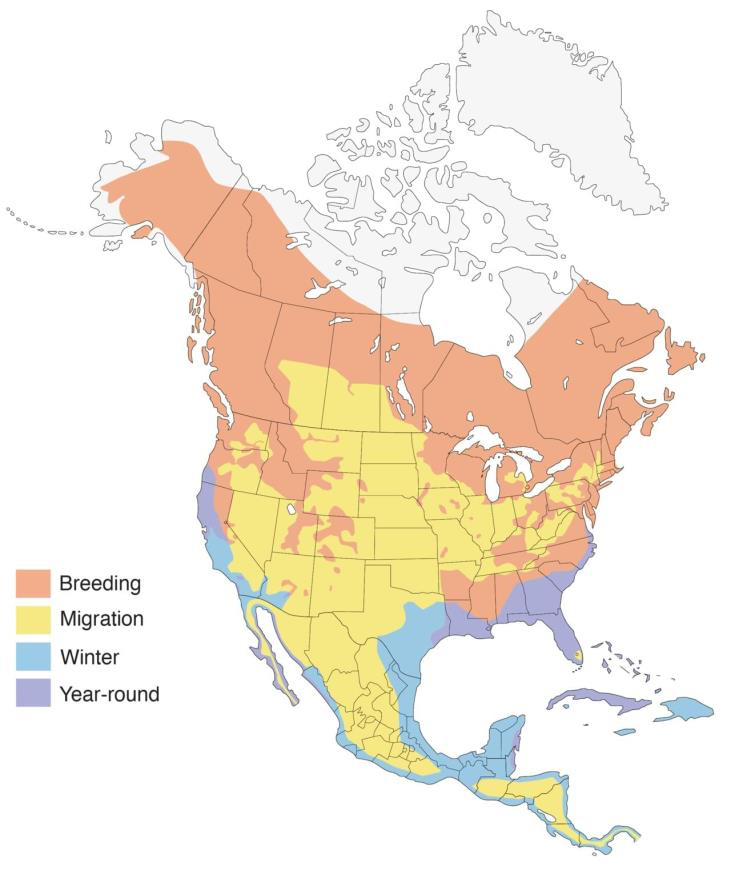
Most Osprey that breed in North American will migrate to Central and South America for the winter. These birds will typically migrate through broad areas in the west and interior eastern U.S. A few Osprey will winter in the southern states of the U.S. like Florida, California, and Texas.
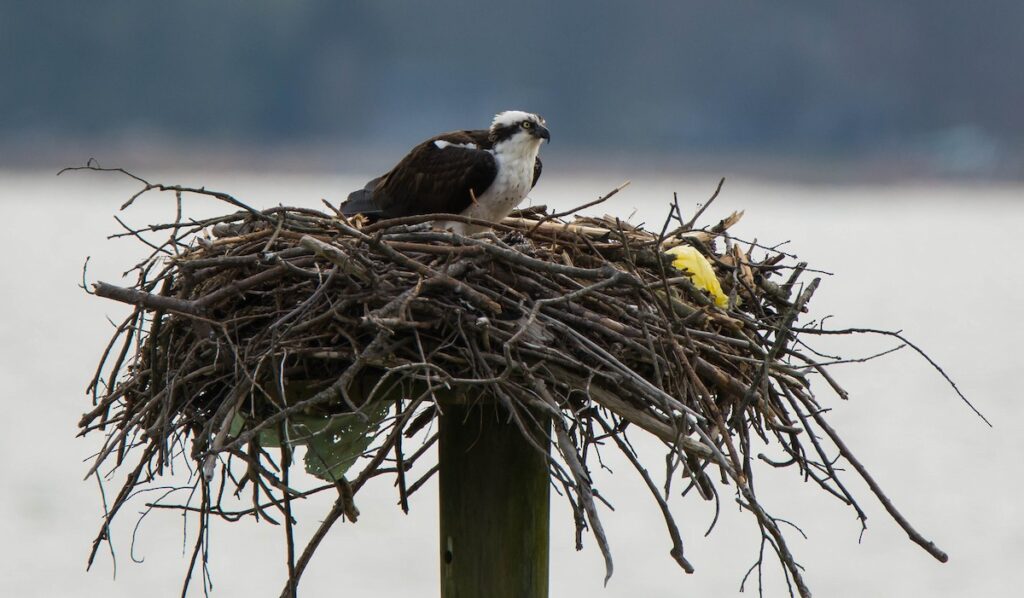
They are commonly seen soaring over shorelines, patrolling lakes and rivers, and sitting on their large nests typically found near water. Many lakes or ponds will have platforms set up to attract a breeding pair and will help keep these birds from nesting on top of electrical poles.
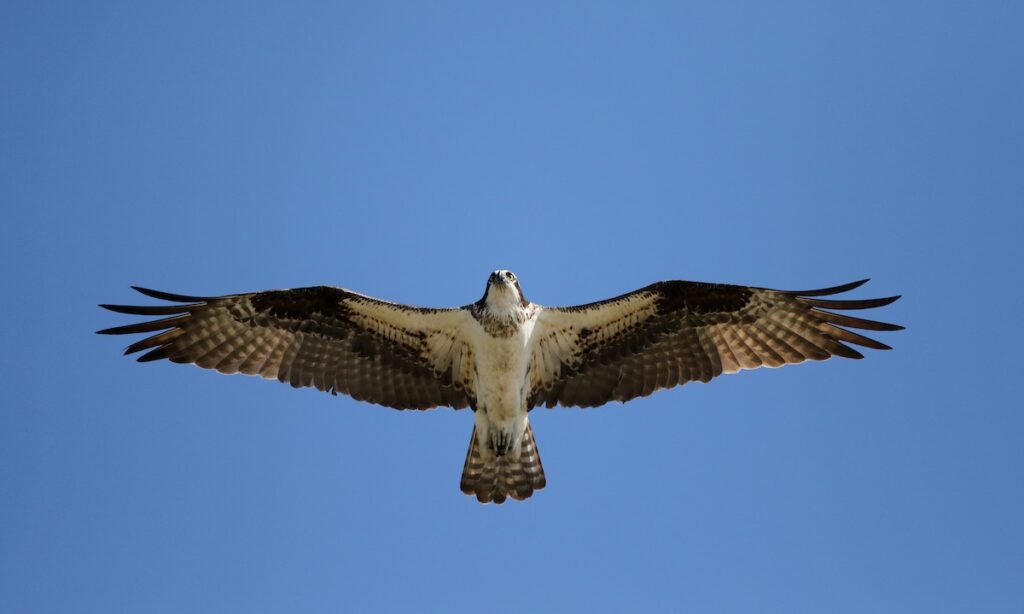
They are slightly smaller than eagles and larger and longer than hawks. The black streak across their head and the wing shape, more like a gull than like an eagle, will help to identify them. They will characteristically hold a fish with one foot in front of the other as they fly, helping them to grip the fish more easily and making them slightly more aero dynamic.
An Osprey may fly more than 160,000 migration miles during its 15-to-20-year lifetime. Scientists track Ospreys by strapping lightweight satellite transmitters to the birds’ backs. The devices pinpoint an Osprey’s location to within a few hundred yards and last for 2–3 years. During 13 days in 2008, one Osprey flew 2,700 miles.