Migrant type: Resident to long-distance migrant
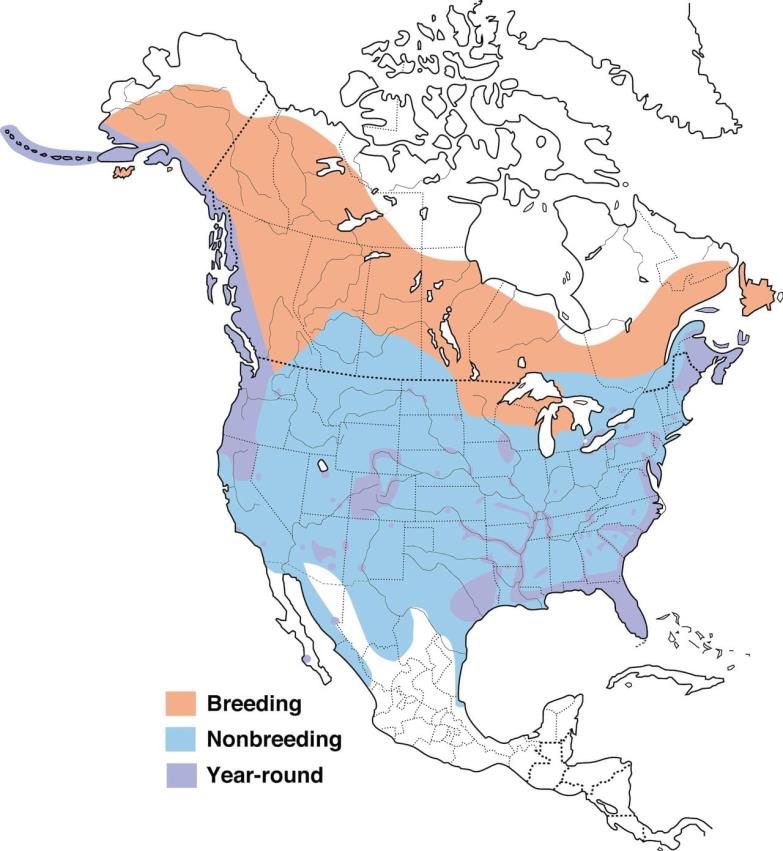
These well known and easily recognized birds have complex migration patterns that will vary with age, breeding location, and food availability. Northern adults will typically begin migrating in the fall when lakes and rivers freeze over and will shift to coasts or open water. They will return to breeding grounds depending on the weather and food. That time period can range from January to March.
In Montana, they will be found year-round and often are seen scavenging on roadkill during the wintertime when hunting for fish is not available. They will mostly stay in North America and rarely venture south into Central America.
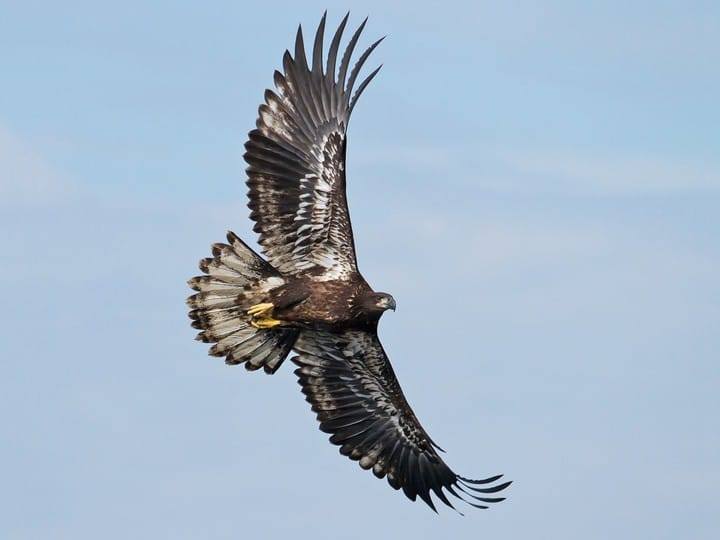
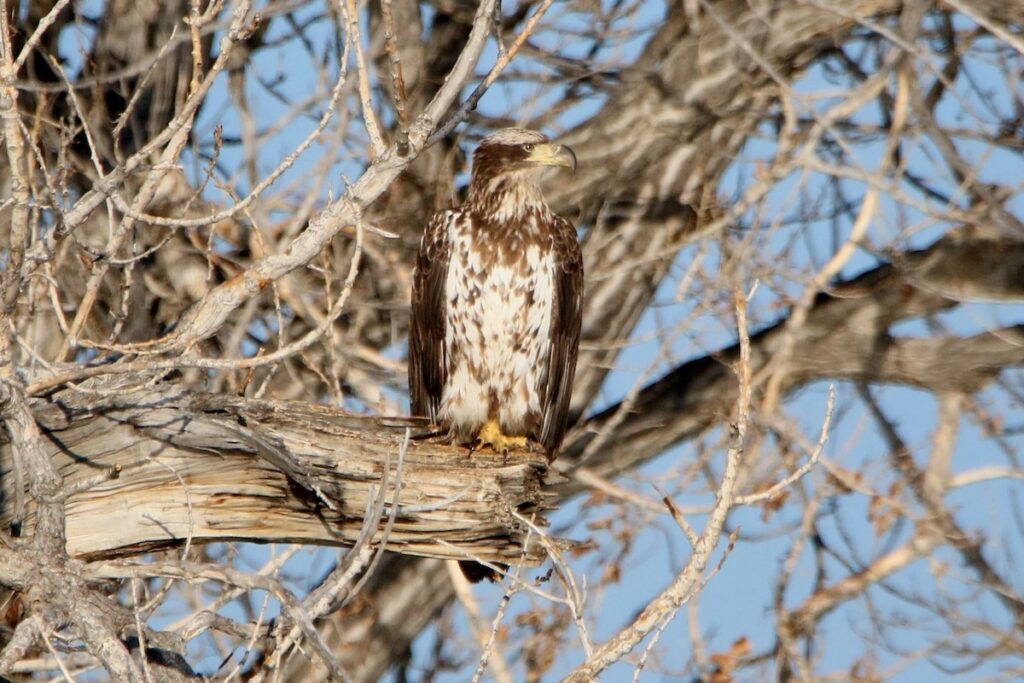
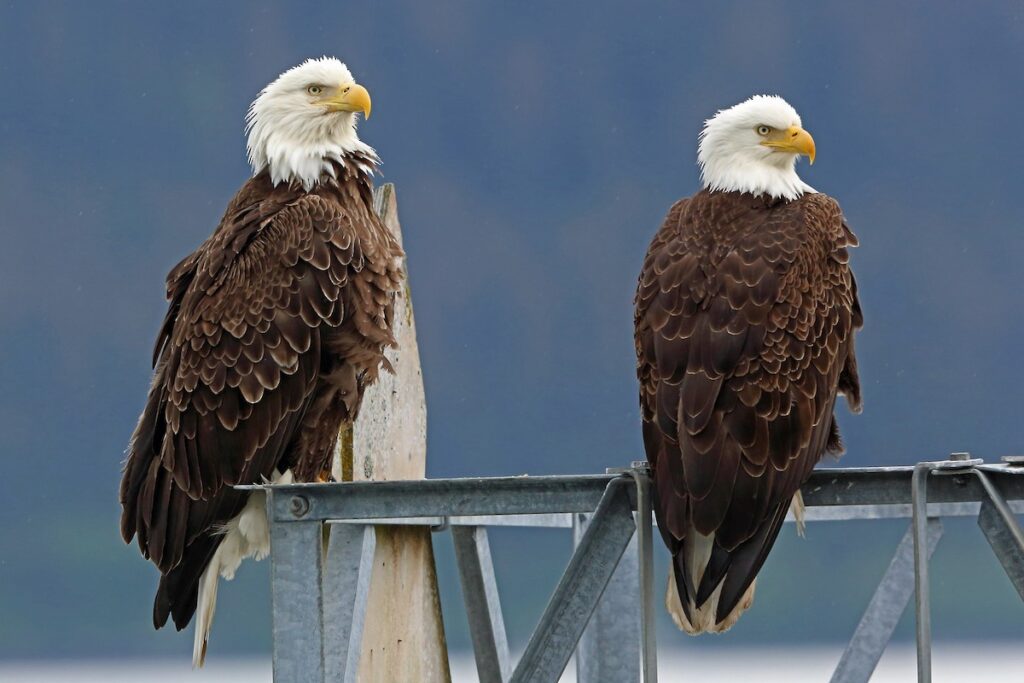
These birds are commonly known for their white head and tail with a dark brown body, but they do not get these features until they are 5 years old. In the first five years they will be mostly brown with white spotting and will even have a brown/black beak in the first 3 years. Slowly throughout their 2nd and third years they will molt in more and more white feathers on their head and tail.