
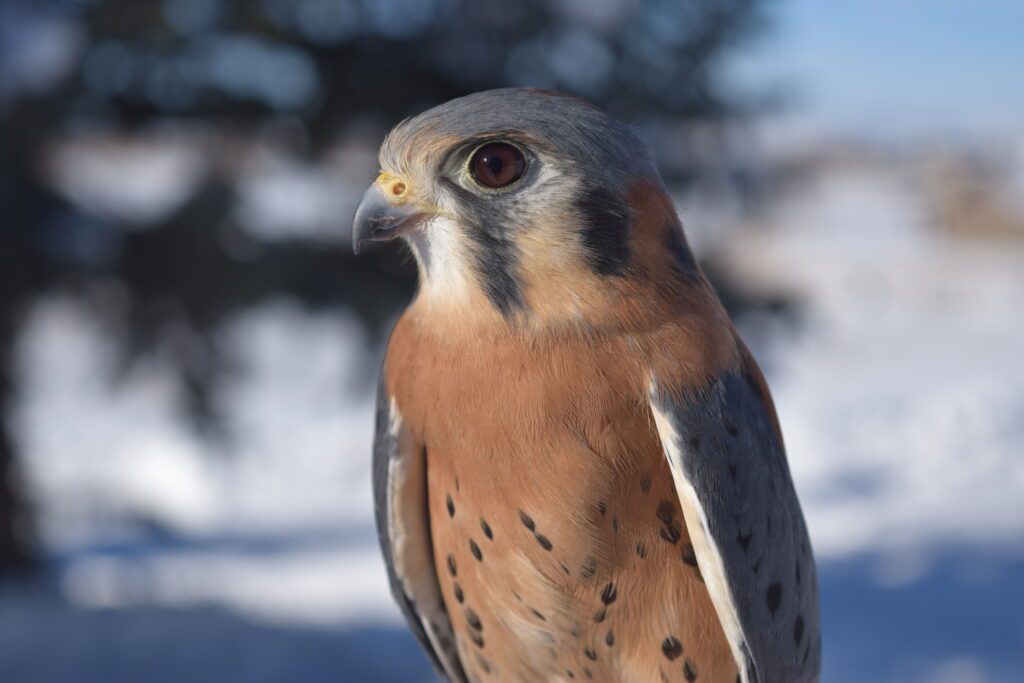
North America’s tiniest falcon, embodies a predator’s fierce spirit within its small frame. The males have a striking slate-blue heads and wings with rusty-red backs, while females display more of the warm brown-rusty color. Kestrels hunt for insects, small mammals and birds in open spaces, often perching on wires or poles, or hovering against the wind, skillfully flapping and adjusting their long tails to maintain their position. Unfortunately, Kestrel populations are declining in some areas; you can assist by installing nest boxes—visit www.nestwatch.org for designs and dimensions.
Fun Facts
- Kestrels hide extra kills (also known as a cache) in grass clumps, tree roots, bushes, fence posts, tree limbs, and cavities, to save the food for lean times or to hide it from thieves.
- The oldest American Kestrel was a male found in Utah in 2001, at least 14 years and 8 months old. He was banded in 1987, while the average lifespan is around 5 years.
- Being one of the smallest birds of prey, American Kestrels face challenges as they are hunted by larger birds like Northern Goshawks and Red-tailed Hawks, as well as snakes and fire ants.
- In certain cities, sports enthusiasts enjoy an added spectacle during evening games: kestrels perched on light poles. These birds skillfully track moths and other insects illuminated by the bright stadium lights, catching their prey mid-flight.
