
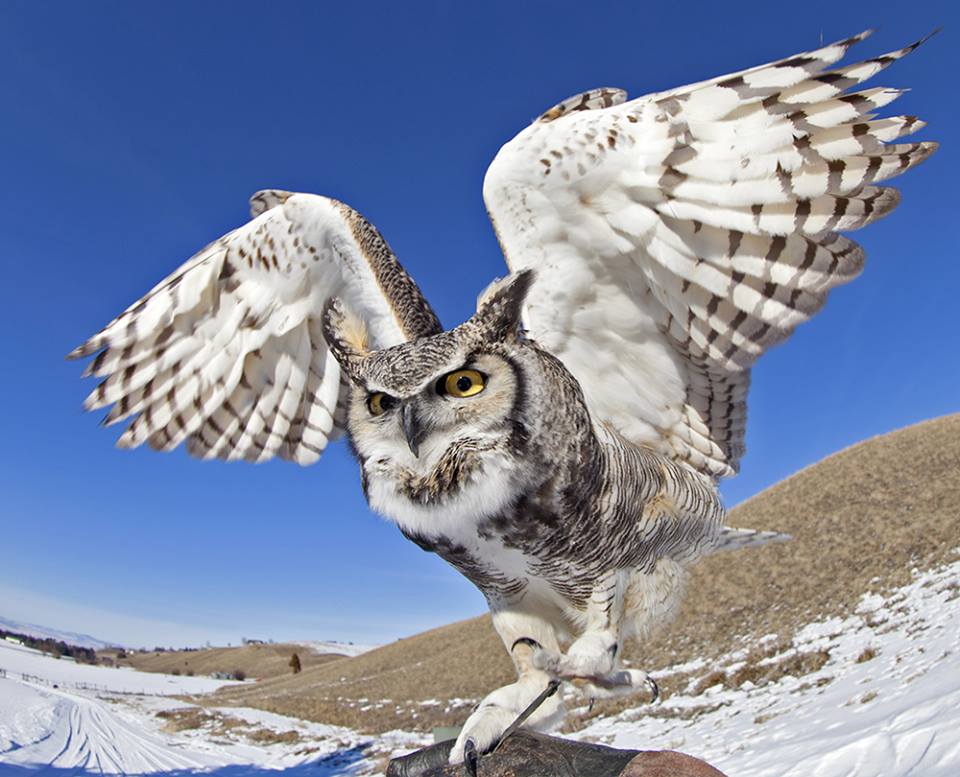
With their distinctive long, earlike tufts, piercing yellow-eyed gaze, and deep hooting calls, this powerful predator can hunt birds and mammals larger than itself. However, it also feeds on smaller creatures such as scorpions, mice, and frogs. The Great Horned Owl is one of the most prevalent owl species in North America, thriving in a variety of environments including deserts, wetlands, forests, grasslands, backyards, cities, and nearly any semi-open habitat from the Arctic to the tropics. Mated pairs fiercely defend their territories through vigorous hooting. In response to intruders and potential threats, Great Horned Owls display behaviors such as bill-clapping, hissing, screaming, and guttural sounds, and if necessary, they will spread their wings and strike with their feet as the threat escalates.
Fun Facts
- While the female Great Horned Owl is larger in size, the male boasts a larger syrinx (voice box) and has a deeper call. Pairs often communicate together, showcasing noticeable differences in pitch.
- Great Horned Owls are covered in approximately 12,000 incredibly soft feathers that provide insulation against frigid winter temperatures and enable them to fly silently while hunting for prey.
- The plumicorns (ear tufts) serve as part of the owl’s camouflage. When the wind blows, these tufts move, and the owl can flatten its feathers to mimic a tree branch, making the tufts resemble leaves.
- Great Horned Owls are incredible hunters capable of capturing substantial prey, including raptors like Ospreys, Peregrine Falcons, Prairie Falcons, and various other owls. They are also among the few natural predators of skunks.
