
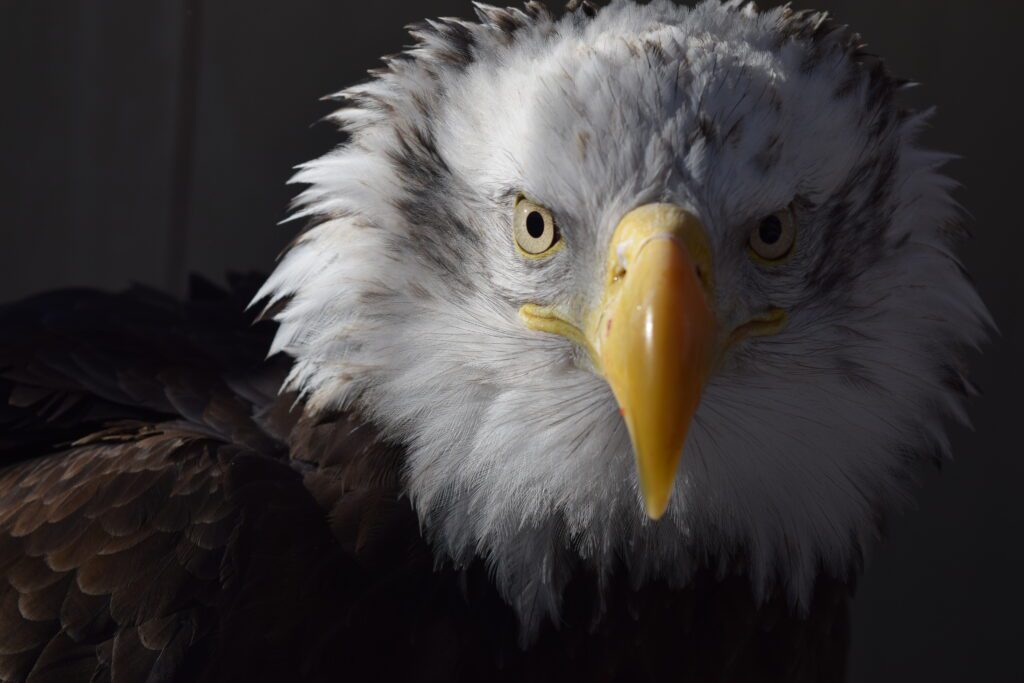
The Bald Eagle has served as the national symbol of the United States since 1782 and has held spiritual significance for Native American communities long before that. Contrary to their name, these majestic birds are not actually bald; their striking white heads contrast beautifully with their rich chocolate-brown bodies and wings. You can often find Bald Eagles near lakes, rivers, reservoirs, marshes, and coastal areas. Once threatened by hunting and pesticides, Bald Eagles have rebounded thanks to protective measures. Adult Bald Eagles display white heads and tails paired with dark brown bodies and wings, while their legs and beaks are a vivid yellow. Immature Bald Eagles, on the other hand, have predominantly dark heads and tails, with their brown wings and bodies mottled with varying amounts of white. These birds often scavenge for food by harassing others or consuming carrion. While their primary diet consists of fish, they also hunt mammals, gulls, and waterfowl.
Fun Facts
- Instead of fishing for themselves, Bald Eagles often target the catches of other animals. They will harass a hunting Osprey until the smaller bird drops its prey mid-flight, allowing the eagle to swoop in and seize it.
- The largest recorded Bald Eagle nest, located in St. Petersburg, Florida, measured an impressive 9.5 feet in diameter and reached a height of 20 feet.
- Young Bald Eagles spend their first four years exploring vast territories in a nomadic lifestyle, capable of flying hundreds of miles daily. Some youngsters from Florida have traveled as far north as Michigan, while others from California have made it to Alaska.
- Bald Eagles do not acquire their distinctive white head and tail feathers until they reach the age of 5 to 7 years.
