
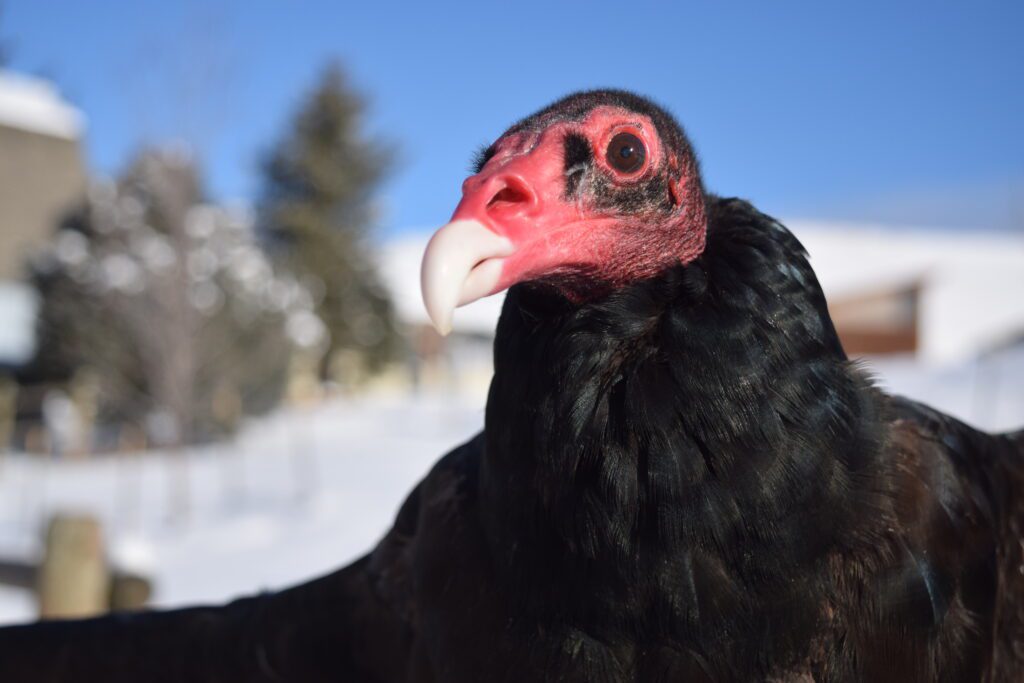
If you’ve been searching for raptors on a clear day, you may have felt a thrill upon spotting a large bird soaring in the distance—perhaps an eagle or an osprey. However, if it’s gliding with its wings in a V shape and making wobbly circles, it’s most likely a Turkey Vulture. These birds expertly ride thermals and utilize their exceptional sense of smell to locate fresh carcasses. As scavengers, they play a vital role in tidying up the environment, consuming remains with their sharply hooked beaks while keeping their bald heads pristine. Turkey Vultures primarily feast on mammals, but they are also known to indulge in reptiles, other birds, amphibians, fish, and even invertebrates. They have a preference for recently deceased animals but often wait for the flesh to soften before they can break through the skin. Turkey Vultures nest in a variety of locations, including rock crevices, caves, ledges, thickets, mammal burrows, hollow logs, fallen trees, abandoned nests of hawks or herons, and even deserted buildings.
Fun Facts
- The Turkey Vulture uses its keen sense of smell to locate carrion. They are one of the few bird species to use their nose instead of eyes to find food!
- As a means of self-defense, Turkey Vultures may regurgitate their stomach contents onto a bird, animal, or human that approaches them too closely. Considering what they eat, this can be a powerful weapon.
- When it’s hot outside, Turkey Vultures will defecate on their feet to cool off.
- In western films, the antagonist often threatens to abandon the hero in the desert for the buzzards, referring to vultures. While “buzzard” is commonly used to describe vultures in the U.S., it is important to note that buzzards are actually a species of hawk.
- The stomach acid of the Turkey Vulture is extremely acidic, enabling them to digest nearly anything. This unique adaptation allows them to consume carcasses infected with anthrax, tuberculosis, and rabies without falling ill.
