
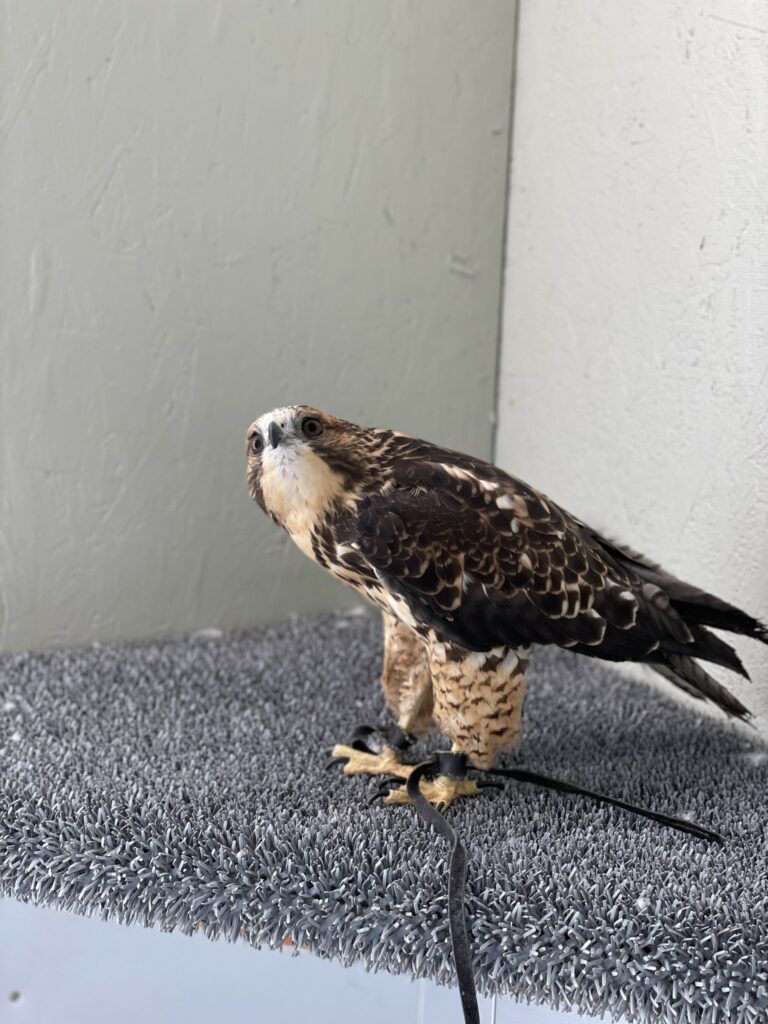
A common species in the open landscapes of the Great Plains and the West, Swainson’s Hawks can be seen soaring gracefully or resting on fence posts and irrigation spouts. These striking gray, white, and brown hawks hunt for rodents while in flight or even chase after insects on the ground. In the fall, they embark on an impressive migration to their wintering grounds in Argentina—one of the longest migrations of any American raptor—often traveling in flocks that number in the hundreds or thousands. To spot Swainson’s Hawks, your best chance is during the summer in open areas west of the Mississippi River, where they can be seen perched on utility poles, fence posts, and solitary trees. While they exhibit some variation, most Swainson’s Hawks showcase light-colored bellies, a dark or reddish-brown chest, and brown or gray upperparts. Their unique underwings feature white linings that create a striking contrast with their blackish flight feathers.
Fun Facts
- Swainson’s Hawks provide their chicks with a diet consisting of rodents, rabbits, and reptiles. However, outside of the breeding season, adult hawks mostly consume insects, particularly grasshoppers and dragonflies.
- The oldest recorded Swainson’s Hawk lived over 26 years, banded in California in 1986 and recaptured in 2012.
- When soaring or migrating, groups of hawks are referred to as “kettles.” Swainson’s Hawks excel in this area, often forming massive flocks that can number in the tens of thousands. They frequently mingle with Turkey Vultures, Broad-Winged Hawks, and Mississippi Kites, creating a spectacular sight of migrating birds.
- Male Swainson’s Hawks choose nest sites at the tops of lone trees or small groves near streams, often constructing nests in stands of trees near agricultural fields and pastures for easy access to food.
